Playing Past Midnight: How Your Late-Night Gaming Sessions Are Warping Your Data and Your Health

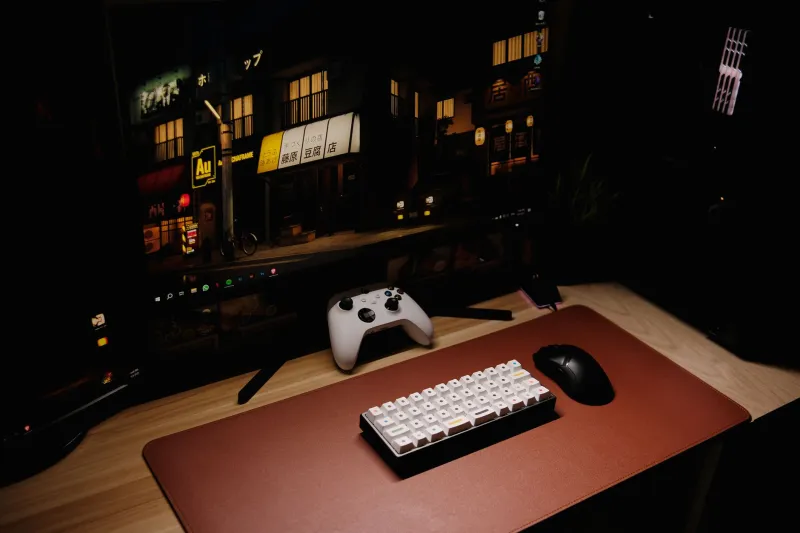
There's a specific kind of gamer who only really gets going around 11 PM. Maybe you work long hours. Maybe the kids are finally asleep. Maybe you've just always been a night owl, and the quiet of a dark house at midnight feels like the only time gaming is truly yours. Whatever the reason, late-night sessions are a real and common part of how millions of Americans actually play games.
The problem is that your tracking data has no idea what to do with you.
Playtime analytics are built around assumptions — that sessions happen at reasonable hours, that they last a predictable amount of time, that your play patterns across a week form some kind of coherent shape. When you're consistently gaming from 11 PM to 2 AM, or pulling the occasional all-nighter on a Friday, those assumptions break down. And the distorted data you end up with doesn't just misrepresent your habits. It can actively hide warning signs that your relationship with gaming is heading somewhere unhealthy.
Why Irregular Hours Break Your Analytics
Most playtime tracking — whether it's built into a platform or something you're managing through a third-party tool — is fundamentally time-agnostic. It records duration, not context. A two-hour session at 7 PM on a Tuesday looks identical in the data to a two-hour session at 1 AM on a Sunday. Same entry. Same weight. No distinction.
But those two sessions are not the same thing, and your body knows it even if your tracker doesn't.
When you start layering irregular session timing on top of that already-flat data, a few specific distortions emerge. First, your weekly and monthly hour totals look higher than they functionally are. A player who games from midnight to 3 AM four nights a week is logging 12 hours — but those 12 hours are coming out of sleep time, recovery time, and cognitive restoration time that the data doesn't account for. The number looks fine. The person behind the number might not be.
Second, late-night sessions tend to be longer than daytime ones. There's no natural stopping point when the rest of the world is asleep. No obligation pulling you away. This inflates your average session length in ways that make your engagement look deeper than it might actually be. You're not necessarily more into the game at 1 AM — you might just have fewer reasons to stop.
The Burnout Signal Hidden in Your Session Timestamps
Here's the thing about burnout: it rarely announces itself. Most players don't wake up one day and suddenly feel done with gaming. It creeps in. And one of the earliest places it leaves fingerprints is in the timing of your sessions, not just the length.
Burnout-adjacent gaming tends to follow a recognizable pattern. Sessions migrate later and later into the night. The games you're playing during those late hours are often comfort titles — low-stakes, familiar, low-decision-density. You're not exploring new content or chasing achievements. You're basically using a game the way some people use TV: as a way to decompress without fully engaging.
The hour count keeps climbing. The engagement quality drops. And because your tracker sees both of those as the same kind of data point, it can't tell you that something is off.
If you're using GameTime Tracker or any similar platform and you notice that your sessions are consistently shifting later over a period of weeks, that's worth paying attention to. Not because late-night gaming is inherently bad — it isn't — but because a sustained migration toward irregular hours is often a symptom of something else going on. Stress, sleep disruption, social isolation, or just the particular flavor of exhaustion that makes low-effort gaming feel like the only thing you can handle.
Time Zones, Work Schedules, and the Shift Worker Problem
Not everyone gaming late at night is doing it because they lost track of time. For a significant chunk of the US gaming population — people working retail, healthcare, hospitality, logistics — late-night gaming isn't a choice. It's what the schedule allows.
If your shift ends at midnight and you wind down with two hours of gaming before sleeping until 10 AM, your tracking data looks bizarre compared to a 9-to-5 player's profile. Your "daily" session might technically span two calendar dates. Your weekly patterns don't align with traditional weekend spikes. Platforms that generate insights based on population averages are essentially comparing you to a lifestyle you don't live.
This matters because shift workers are already at elevated risk for sleep disruption and the health complications that come with it. Gaming during those late hours is often genuinely recreational and restorative — it's real leisure time. But if the analytics platform treats those sessions the same way it would treat a non-shift worker gaming until 3 AM out of compulsion, the insights you get back are going to be useless at best and misleading at worst.
The fix here is context, which most tracking tools don't collect. Knowing when you play is only useful if the tool also knows something about your schedule. Until platforms build that kind of contextual layer in, manual annotation is your best option — flagging sessions as "work-night wind-down" versus "weekend binge" so you can actually compare like with like when you review your own data.
Reading the Signs Before They Become a Problem
So what does healthy late-night gaming actually look like in the data, versus the version that's worth worrying about?
Healthy late-night patterns tend to be consistent. You game at roughly the same time, for roughly the same duration, and the games you're playing are ones you're actively choosing and enjoying. The sessions end because you're satisfied, not because you passed out at the keyboard.
The concerning version looks different. Session start times keep pushing later. Duration creeps up because you're not engaging enough to feel done. The game choice shifts toward autopilot titles. And critically, your daytime hours start showing fatigue effects — shorter sessions, more frequent quits, games abandoned mid-run.
If you track your gaming with any regularity, pull up your session history and look at timestamps, not just durations. Ask yourself whether the pattern you're seeing is one you'd have chosen intentionally, or one that just accumulated while you weren't paying attention.
Your data is trying to tell you something. Late-night gaming isn't the villain here — but the story your timestamps tell might be more honest than the one you've been telling yourself.