Stream Smarter, Not Harder: How Your Playtime Data Can Transform Your Content
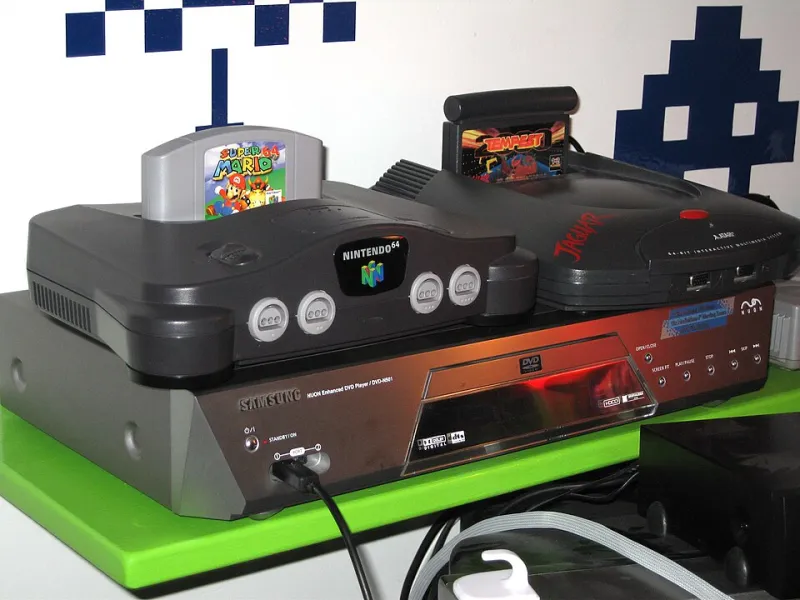
Photo: Blake Patterson from Alexandria, VA, USA, CC BY 2.0, via Wikimedia Commons
There's a moment every streamer knows well. You've just wrapped a four-hour session, your viewer count peaked somewhere in the middle, and now you're staring at your dashboard wondering what actually worked. Was it the game? The time slot? The energy you brought? Most content creators shrug it off and just try again tomorrow.
But here's the thing — if you've been tracking your playtime, you already have the answers. You're just not looking in the right place.
The Gap Between Playing and Performing
Streaming and gaming are two different activities, even when they happen at the same time. When you're gaming for yourself, you're in the zone. When you're streaming, you're also performing, managing chat, and making split-second decisions about pacing. That dual role creates a weird disconnect where your best gaming sessions and your best streaming sessions don't always line up.
Playtime analytics can help bridge that gap. By reviewing your tracked data — session lengths, game frequency, time-of-day patterns — you start to see something interesting: there are windows where you consistently play longer, switch games less, and (if you cross-reference with your stream stats) hold viewer attention better. That's not a coincidence. That's your natural rhythm showing up in the numbers.
Your Game Rotation Is Telling a Story
One of the most underrated metrics for streamers is game-switching frequency. If you hop between five titles in a single week without any clear pattern, your audience has a harder time knowing what to expect from your channel. Consistency isn't just about showing up — it's about showing up with something familiar.
Look at your playtime logs over the last 30 to 60 days. Which games are getting the most hours? Which ones do you return to after a break? The titles you naturally gravitate toward aren't random — they're the games you find genuinely engaging, and that enthusiasm is contagious on stream.
Here's a simple exercise: take your top three most-played games from last month and ask yourself whether those are the same games you've been streaming. If there's a mismatch, you might be streaming what you think your audience wants instead of what you actually love to play. Viewers are surprisingly good at detecting when a creator is going through the motions.
Scheduling Around Your Peak Playtime Windows
Most streaming advice tells you to go live when your target demographic is online. That's solid general guidance, but it ignores a crucial variable — when you are at your best.
Your playtime tracker knows when you tend to start sessions, how long they last, and when they typically wrap up. If your natural gaming window is 8 PM to midnight on weekdays, forcing yourself to stream at 6 PM because some blog said that's when Twitch traffic peaks is fighting against your own energy. Tired, distracted streamers don't retain viewers, no matter how good the time slot looks on paper.
Use your session data to identify your two or three most consistent playtime windows. These are the slots where you've historically played the longest without bailing early. Build your stream schedule around those windows first, then optimize for audience availability second. The sweet spot is where your natural energy and viewer availability overlap — and you can't find that overlap without tracking your side of the equation.
Achievement Progress as Content Gold
Here's an angle a lot of streamers completely miss: your achievement data is a content roadmap.
When you track which achievements you're actively working toward, you give your audience a narrative to follow. "I'm 60% through the achievements in this game" is a story with a beginning, middle, and end. Viewers who tune in during that journey feel invested. They come back to see how it ends.
Contrast that with the streamer who just fires up a game with no stated goal and plays until they get bored. There's nothing wrong with that style, but it's a much harder community to build because there's no shared mission pulling people back.
Your playtime tracker can show you exactly where you are in each game's achievement ecosystem. Use that visibility to plan content arcs — commit to finishing a specific achievement set on stream, and let your data tell you realistically how many sessions that might take based on your typical session lengths.
Authentic Communities Are Built on Honest Data
There's a broader psychological principle at work here. Streamers who understand their own habits come across as more self-aware, and self-awareness is genuinely appealing to watch. When you can say "I tend to play this game better in the mornings" or "I notice I always burn out on this title around the 40-hour mark" — and you know that because you've been tracking it — your audience sees someone who takes their craft seriously.
That authenticity compounds over time. Viewers who feel like they know the real you, including your gaming patterns and preferences, stick around longer. They become regulars. They tell friends.
Your playtime data isn't just a personal analytics tool. It's the foundation for a more honest, more consistent, and ultimately more successful streaming presence. The streamers who figure that out early have a real edge — and now you know where to start.