When the Trophy Becomes the Trap: How to Tell If Your 100% Run Is Still Fun

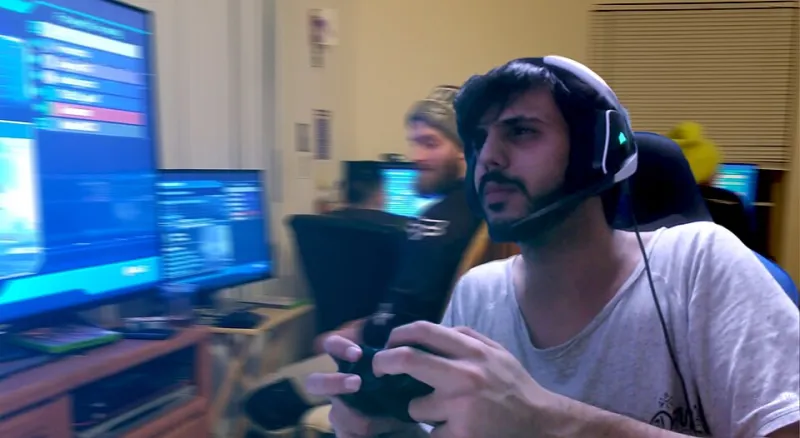
Photo: Hemant 2002, CC BY-SA 3.0, via Wikimedia Commons
There's a specific kind of satisfaction that comes with seeing that platinum trophy pop. The screen lights up, the sound effect hits, and for a moment you feel like you've truly conquered something. It's one of gaming's best feelings.
But here's a question worth sitting with: when did you last feel that way during the grind itself — not just at the finish line?
For a lot of completionists, the honest answer is uncomfortable. The fun quietly left the building somewhere around hour 47, but the hours kept piling up anyway. Your GameTime Tracker data almost certainly has the receipts.
The Satisfaction Curve Nobody Talks About
Every game has what you might call a personal satisfaction curve — the arc of enjoyment you experience as your playtime climbs. For most people, that curve rises fast in the early hours, peaks somewhere in the middle, and then gradually tapers off as the content gets more familiar.
Completion hunting throws a wrench into that natural curve. The moment you commit to 100%, you're no longer playing the game on the game's terms. You're playing it on the achievement list's terms. And those two things are often wildly different experiences.
A 90-hour open-world RPG might deliver its best content in the first 35 hours. The platinum, though? That might require another 55 hours of side quests you've already mentally checked out of, collectibles scattered across zones you've long since stopped caring about, and multiplayer trophies that require coordinating with strangers at 1 a.m. on a Tuesday.
Your tracker sees all of this. Session lengths that start shrinking. Late-night starts that push into hours you'd normally be asleep. Longer gaps between play sessions that suggest you're procrastinating on a game you technically love.
What Your Session Data Is Actually Telling You
One of the most useful things GameTime Tracker can surface is session-length trends over a single title. When you're genuinely having fun, sessions tend to be longer and more consistent — you sit down, lose track of time, and look up to find two hours have passed.
Compulsive completion grinding looks different in the data. Sessions get shorter but more frequent. You're logging in, knocking out a checklist item, and logging off. The play pattern starts to resemble a chore schedule more than a hobby.
Watch for these specific signals in your own data:
- Shrinking average session length over the back half of a playthrough
- Increased session frequency with decreased total daily hours — lots of short check-ins instead of real play
- Longer pre-session delays — the gap between when you open the app and when you actually start playing grows as motivation drops
- Completion percentage stalling — you're logging hours but the achievement count isn't moving, which usually means you're doing low-effort filler content to delay the harder tasks
None of these signals mean you're doing something wrong. They just mean the game has shifted from entertainment to obligation in your brain, and that shift has a cost.
The Compulsion Creep
Gaming psychology researchers have a name for what happens when external rewards — trophies, achievement scores, completion percentages — start overriding intrinsic motivation. It's sometimes called the overjustification effect, and it's more common in gaming than most people realize.
Basically, once you start chasing a measurable external reward, your brain gradually stops generating its own internal reward for the activity itself. The fun becomes contingent on the trophy. And when the trophy requires tasks that aren't fun, you're stuck in a loop where you're working hard for a reward that no longer feels as satisfying as it used to.
This is the platinum trap in a nutshell. You started playing a game because it was a great experience. You committed to 100% because you wanted to extend that experience. But somewhere in the back half, the experience ended and the grind began — and you kept going anyway because stopping felt like failure.
Your data doesn't judge you for this. But it does document it pretty clearly.
How to Recalibrate Without Abandoning Your Goals
The good news is that recognizing the trap doesn't mean you have to give up on completion runs entirely. It just means getting smarter about how you set your goals in the first place.
Try setting a personal completion threshold before you start. Instead of defaulting to 100% on every title, look at the achievement list upfront and decide which ones actually sound fun versus which ones sound like work. Maybe your real goal is 80% — the stuff you'd genuinely enjoy — rather than the final 20% that requires grinding a specific enemy for six hours to unlock a weapon skin.
Use your historical data as a baseline. Look back at games you've platinum'd before and check where your session quality started to drop. If it consistently happens after the 60-hour mark, that's useful self-knowledge. It tells you that your personal fun ceiling on completion runs is probably around 55-60 hours, and anything beyond that is diminishing returns.
Build in a fun check-in. Every five hours on a completion run, ask yourself a simple question: Am I enjoying this, or am I just finishing it? There's nothing wrong with finishing something for the sake of finishing it — but you should be doing that consciously, not accidentally.
Give yourself permission to bank the partial win. A 78% completion with fond memories of a great game is genuinely better — for you, for your relationship with gaming — than a 100% completion you associate with stress and obligation. Your tracker will show both. Only one of them will make you want to replay the game someday.
The Hours You'll Never Get Back (And Why That's Okay)
Here's the thing about playtime data: it's a record, not a verdict. Those 60-hour completion grinds you didn't fully enjoy? They're logged, they happened, and they're part of your gaming history. The goal isn't to feel bad about them.
The goal is to use them as information going forward.
GameTime Tracker exists precisely for this kind of self-awareness. Not to make you feel guilty about how you spend your hours, but to give you the visibility to spend them better next time. If your data shows a consistent pattern of completion runs that stop being fun halfway through, that's not a character flaw — it's a preference profile. And preference profiles are incredibly useful.
The platinum trophy will still be there if you want it. But so will your next great gaming experience, waiting to be fully enjoyed rather than just fully completed.
Sometimes the smartest move a completionist can make is knowing exactly when to stop.