Playing for the Squad: How Friend Group Pressure Is Quietly Erasing Your Gaming Identity
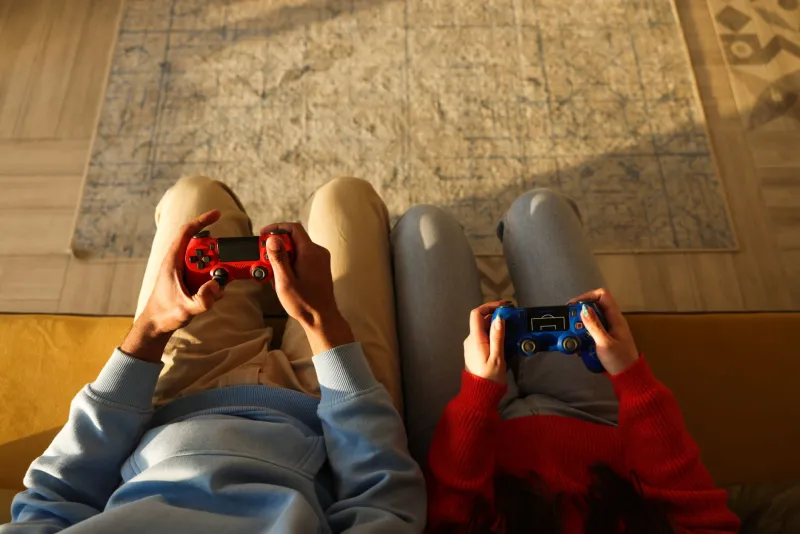
There's a version of your gaming life that lives in your playtime tracker — the one with the real numbers. Then there's the version your friends think they know about you, built on Discord invites, party queues, and the unspoken rule that if everyone else is dropping into a match, you probably should too.
Those two versions? They don't always line up.
If you've ever looked at your session logs and felt vaguely confused — like, when exactly did I put 80 hours into a battle royale I don't even enjoy? — you're not alone. Social gaming is one of the most powerful forces shaping how we spend our play time, and it operates almost entirely below the conscious level. You don't decide to abandon your preferences. It just kind of... happens, one group session at a time.
The Invisible Shift in Your Session Data
Here's what the pattern usually looks like in your data. You start a new game — something you genuinely picked for yourself. Maybe it's a sprawling RPG, a tight indie platformer, a strategy title you've been eyeing for months. Your early sessions are longer, more consistent, and your return rate is high. You're engaged.
Then the group chat lights up. Somebody bought the new multiplayer shooter. Or the squad wants to grind ranked together. Or there's a limited-time event in whatever live-service game your friends are currently obsessed with. Suddenly your solo playtime drops off, your session frequency shifts, and those longer, focused blocks of personal gaming get replaced by shorter, more erratic bursts scheduled around other people's availability.
What's interesting — and what GameTime Tracker users often notice when they pull up their cross-game analytics — is that the games you play socially tend to accumulate hours fast, but those hours don't always correlate with enjoyment. You can rack up serious time in a game you're lukewarm about simply because it's the social hub your friend group has chosen for the season.
Why Your Brain Doesn't Flag This as a Problem
Human beings are wired for social belonging. The discomfort of opting out of a group activity — even a low-stakes one like a gaming session — activates the same psychological machinery that once kept us from getting kicked out of the tribe. That's not an exaggeration. Research in social psychology consistently shows that exclusion, even minor and informal, registers as a genuine threat.
So when your friends are all queuing up and you'd rather spend two hours finishing a side quest in your solo RPG, your brain doesn't frame that as a neutral choice. It frames it as missing out or letting the team down. And over time, you start preemptively choosing the group game before anyone even asks — because it's easier than navigating that low-grade social friction.
This is how gaming preferences get quietly overwritten. Not through any dramatic moment, but through hundreds of small, individually reasonable decisions that, in aggregate, completely reshape your playtime profile.
Reading the Warning Signs in Your Own Stats
So how do you actually identify when this is happening to you? A few things to look for in your tracking data:
High hours, low return enthusiasm. If you've got a game sitting at 60+ hours but you never feel excited to launch it on your own — you only play when someone else initiates — that's worth flagging. Time spent doesn't equal time enjoyed.
Session timing patterns. Solo games you love tend to get played whenever you have free time. Group games often cluster around specific windows — weekend evenings, after work, whenever the friend group is active. If a high-hour game only shows up in those social windows, it's probably a social obligation title, not a personal favorite.
Abandoned solo titles. Look at what you started and dropped around the same time a group game spiked in your logs. That graveyard of half-finished solo experiences is often the clearest evidence that something external redirected your attention.
Genre drift. If your historical data shows you're primarily a story-driven or single-player gamer, but your recent months are dominated by multiplayer titles, ask yourself honestly: did your tastes actually change, or did your social circle?
The Friendship Equation: You Don't Have to Choose
None of this means social gaming is bad or that playing with friends is some kind of trap to avoid. Some of the best gaming memories come from shared experiences — coordinating a raid, clutching a match together, laughing through a co-op disaster. That stuff has real value.
The goal isn't to go full hermit. It's to make sure your gaming life has room for both — the social layer and the personal layer — without the social layer quietly consuming everything else.
A few practical approaches that GameTime Tracker users have found useful:
Protect at least two sessions per week for solo play. Treat them like any other commitment. Put them in your schedule, communicate your availability to friends, and actually use that time on something you chose for yourself.
Use your data to start honest conversations. If your tracker shows you've put 90 hours into a game you don't love, that's useful information. It might be worth telling your group: hey, I'm actually not that into this one — can we try something else? You might be surprised how many people in the group feel the same way but assumed everyone else was having a great time.
Rotate intentionally. Instead of defaulting to whatever the group is currently playing, suggest a rotation where different people get to pick the shared game each month. This distributes the social obligation and guarantees everyone gets to champion a title they actually care about.
Audit your wishlist vs. your actual hours. If your wishlist is full of games you've been meaning to play for a year and your logs show you haven't touched them, that gap is telling you something. Your real preferences are in that wishlist. Your social obligations are in those logs.
Reclaiming the Gamer You Actually Are
Your playtime data is one of the most honest records of how you spend your leisure time. It doesn't lie, it doesn't smooth things over to protect your feelings, and it doesn't care about social dynamics. It just shows you the numbers.
When you look at those numbers and they don't match the gaming identity you thought you had, that's not a reason to feel bad about yourself. It's a signal. Your data is showing you a drift you probably didn't consciously choose, and now you have the chance to course-correct.
The games that made you fall in love with this hobby in the first place — the genres that click for you, the experiences that stuck — those preferences don't disappear just because your friend group moved on to something else. They're still in there, waiting for you to carve out the time.
Track the hours. Read the patterns. Play the games that are actually yours.