Your Real Gaming Hours Are Hiding Across Five Different Devices

Open your Steam profile. Look at your total hours. Feel pretty good about yourself — or maybe a little embarrassed, depending on the number.
Now ask yourself: does that number include the 60 hours you've put into Stardew Valley on your Nintendo Switch? The two months you spent grinding a mobile gacha game during your commute? The PlayStation sessions that live in a completely separate ecosystem? The Steam Deck runs that sometimes sync and sometimes just... don't?
For the majority of American gamers in 2024, the honest answer is no. Your "official" playtime is a partial picture at best. The rest of your hours are scattered across platforms that don't talk to each other, don't report to any central tracker, and often don't even acknowledge that cross-platform data is something worth preserving.
We're calling these your ghost hours. And there are probably more of them than you think.
The Fragmented Ecosystem Problem
The gaming industry has never agreed on a universal tracking standard. Every platform does its own thing.
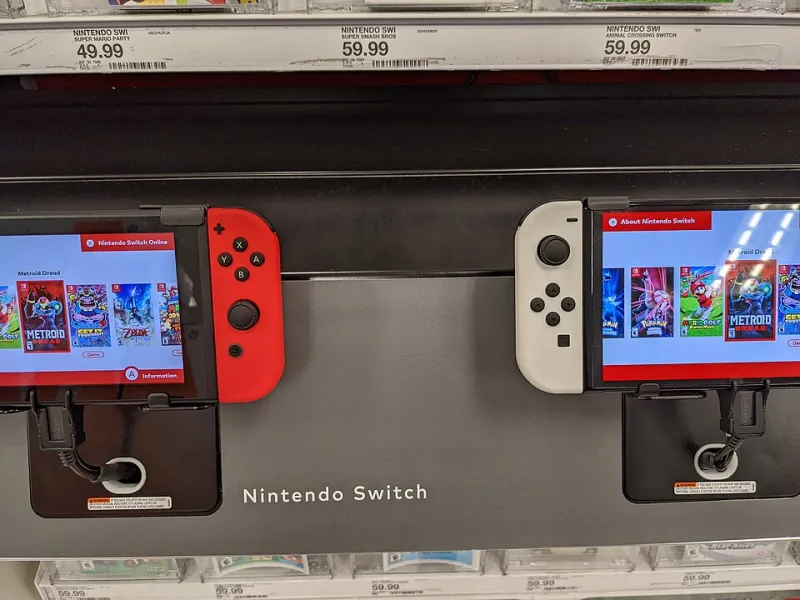
Steam logs hours automatically and makes them public (or private, your call). PlayStation tracks trophies and has a rudimentary playtime feature in the PS5 interface, but it's not always accurate and it's nearly impossible to export. Xbox has Game Pass play history, but it's buried in menus and doesn't aggregate cleanly. Nintendo Switch shows your "Play Activity" — but only in broad ranges, and only per-game, with no total calculation. Mobile? Forget it. iOS Screen Time and Android Digital Wellbeing can tell you how long you spent in an app, but they don't distinguish between actively playing and leaving a game open on the menu screen.
And then there's the Steam Deck — technically a Steam device, so it should sync cleanly, but connectivity issues, offline play, and sleep mode quirks mean your Deck hours are frequently undercounted or delayed in ways that throw off your weekly totals.
The result is that most gamers are walking around with a fundamentally incomplete picture of their own gaming habits.
Who's Most Affected — And Why It Matters
Casual gamers and hardcore players actually have very different ghost-hour profiles, and understanding the difference matters if you're trying to get an accurate read on your own behavior.
Casual players tend to accumulate the most untracked time on mobile. A puzzle game before bed, a quick idle RPG session during lunch — these sessions are short, frequent, and almost never counted in anyone's "real" gaming totals. But add them up across a year and you might be looking at 200+ hours that never appear on any dashboard.
Hardcore gamers, meanwhile, tend to lose hours in console ecosystems. Someone who primarily games on PC might have a Switch they use exclusively for Nintendo exclusives and travel. Those hours feel "separate" — like a different category of gaming — but they're still your time, your engagement, your hobby.
Here's why it matters beyond just the ego satisfaction of a bigger number: if you're using your playtime data to make decisions — about what games to buy, how to balance your gaming schedule, whether you're burning out — you're making those decisions based on incomplete information. Ghost hours distort the picture.
A Practical Audit: Finding Your Missing Time
Getting a real total isn't as complicated as it sounds. Here's a platform-by-platform approach that actually works.
Steam and PC: This is your cleanest data source. Export it, save it, use it as your baseline. If you use third-party launchers like Epic or GOG, check whether they have built-in play tracking — Epic does, GOG does not natively (though GOG Galaxy 2.0 aggregates across platforms if you connect them).
PlayStation: Navigate to Settings > Account > Privacy and then cross-reference your trophy timestamps to approximate time-per-game. It's imperfect, but trophy data is actually a surprisingly useful proxy for session frequency.
Nintendo Switch: Go to your profile page and scroll down to Play Activity. You'll see per-game ranges ("played for 30 hours or more," etc.). It's annoyingly vague, but you can build a reasonable estimate by taking the midpoint of each range.
Xbox/Game Pass: Check your Microsoft account activity log online. It's more detailed than the console interface suggests and can be filtered by game.
Mobile: Use iOS Screen Time or Android Digital Wellbeing and look at your gaming category specifically. Set a one-week baseline, then multiply it out. It won't be perfect, but it'll give you a realistic order of magnitude.
Steam Deck: Force a sync after every major session. Go to Settings > Downloads and trigger a cloud sync manually if you've been playing offline.
What the Full Picture Actually Reveals
When gamers do this audit for the first time, the results are usually surprising in one of two directions.
Some players discover they game way more than they thought. The mobile hours alone can be shocking — especially for people who don't think of themselves as mobile gamers. If you've ever played a mobile title for more than a few weeks, you've probably put in more time than you'd comfortably admit.
Other players discover something more interesting: their gaming is more diverse than their primary platform suggests. A PC gamer who thinks of themselves as exclusively into strategy games might find that their Switch hours are almost entirely RPGs — a whole second gaming identity that their Steam profile doesn't capture.
That second discovery is actually the more valuable one. Because it tells you something real about what you want from gaming in different contexts. Short-burst mobile sessions, deep Switch RPG dives, and long PC strategy campaigns aren't the same kind of experience. Understanding how you distribute yourself across those contexts is useful data for building a gaming life that actually fits how you live.
Building a Cross-Platform Habit
Once you've done the initial audit, the goal is to make cross-platform awareness a regular part of how you think about your gaming.
You don't need a perfect system. You need a good-enough one. A simple spreadsheet updated monthly, a note in your phone where you jot down Switch sessions, a weekly Screen Time check — any of these works. The point isn't precision. The point is that you stop operating on a partial picture.
Your ghost hours are real hours. They count toward burnout, toward your gaming budget ROI, toward understanding what you actually enjoy. Don't leave them haunting platforms that nobody's checking.
Bring them home.